Units and the SI system
Why every engineering number needs a unit, the seven SI base units, the derived units you will meet every day, and how to convert safely.
0 deeper section(s) hidden.
On this page
The idea
A number on its own means nothing to an engineer. “The beam carries 20” could be 20 newtons or 20 tonnes. A says what the number counts. The is the agreed set of units used in science and most of engineering. It is built from seven , and every other unit, such as the newton or the watt, is made by multiplying and dividing them. Get the units right and most calculation mistakes show up before they cause harm.
Everyday intuition
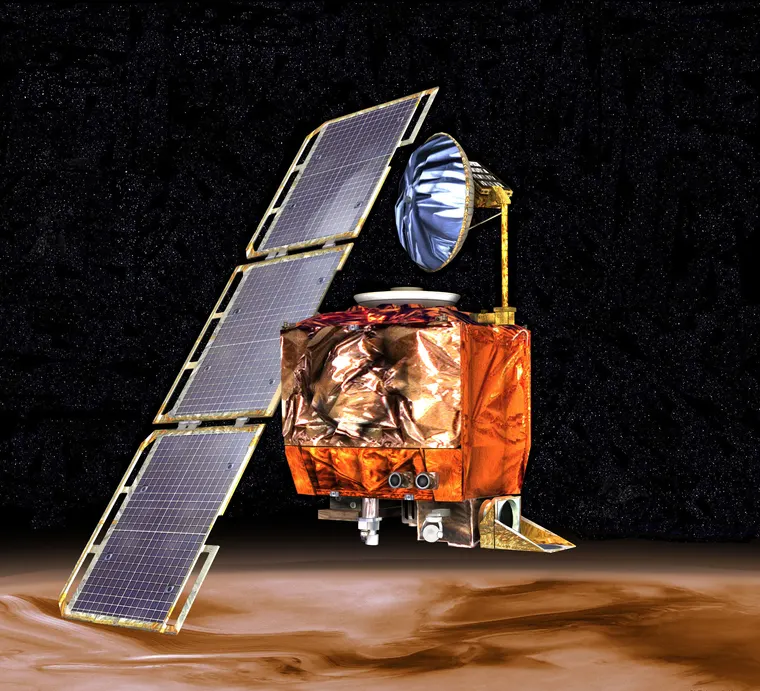
You already use units without thinking: a 2-litre bottle, a 100 km/h speed limit, a 60 W bulb. Mixing them up is easy. A recipe in cups and a scale in grams can ruin a cake. In engineering the stakes are higher: in 1999 NASA lost the Mars Climate Orbiter because one piece of software gave thruster impulse in pound-force seconds while another expected newton-seconds.
How it works
- Seven base units. The SI defines seven base units. Mechanical engineers mostly use four: the (m) for length, the (kg) for mass, the second (s) for time and the (K) for temperature. The other three are the ampere (electric current), the mole (amount of substance) and the candela (light intensity).
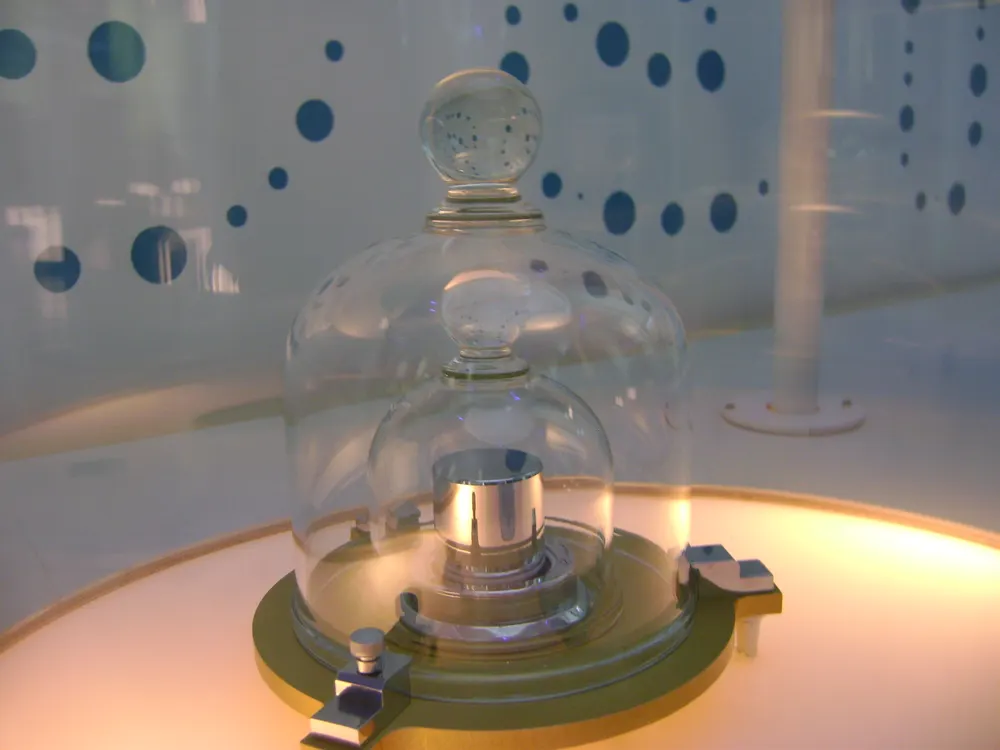
- Fixed by constants of nature. Since 2019 each base unit is defined from a fixed constant of nature, such as the speed of light or the Planck constant. Before that, the kilogram was a platinum–iridium cylinder kept near Paris.
- Derived units. Every other unit is a product of base units. Force uses the : 1 N = 1 kg·m/s². Energy uses the : 1 J = 1 N·m. Power uses the : 1 W = 1 J/s. Pressure and stress use the : 1 Pa = 1 N/m².
- Prefixes scale them. multiply by powers of ten: kilo (k, 10³), mega (M, 10⁶), giga (G, 10⁹), milli (m, 10⁻³), micro (μ, 10⁻⁶). A stress of 250 MPa is 250 × 10⁶ Pa.
- Coherence. If every input is in base SI units (m, kg, s, K), the answer comes out in base SI units too, with no conversion factors. This is the main reason to convert everything to SI before calculating.
- Convert by multiplying by one. A conversion factor such as 1000 m / 1 km equals one, so multiplying by it changes the units but not the quantity. Units cancel like algebra.
Prefixes scale units by powers of ten.
Key formulas
A unit conversion multiplies by a factor equal to one:
Derived units in base units:
Useful equivalences:
- metre, length base unit
- kilogram, mass base unit
- second, time base unit
- kelvin, temperature base unit
- newton, force kg·m/s²
- joule, energy or work N·m
- watt, power J/s
- pascal, pressure or stress N/m²
Worked example
Where it is used
- Every calculation. Drawings, specifications and reports state units on every number.
- Datasheets. Motor power in kW, pump flow in L/s or m³/h, pressure in bar or MPa, torque in N·m.
- International trade. Parts made in one country must fit machines built in another; SI and standard metric threads make that possible.
- Software interfaces. Programs that pass numbers to each other must agree on units in writing, as the Mars Climate Orbiter loss shows.
Common misconceptions
Self-check
Check Convert 72 km/h to metres per second.
Show answer
. A quick rule: divide km/h by 3.6.
Check A battery stores 45 kW·h. How many megajoules is that?
Show answer
1 kW·h = 1000 W × 3600 s = 3.6 × 10⁶ J = 3.6 MJ, so 45 kW·h = 45 × 3.6 = 162 MJ.
Check A tyre is at 2.2 bar. What is that in kPa and in Pa?
Show answer
1 bar = 100 kPa, so 2.2 bar = 220 kPa = 220 000 Pa.
Check Why does a stress of 2.5 MPa equal 2.5 N/mm²?
Show answer
1 MPa = 10⁶ N/m², and 1 m² = 10⁶ mm², so 10⁶ N/m² = 10⁶ N / 10⁶ mm² = 1 N/mm². Working in newtons and millimetres gives stresses directly in MPa.
My notes
Private to this browser. Select any text above to highlight it.